[00:00]
The idea of sacrificing something so you're getting another thing and the other thing is sort of an unknown. you don't know if you're gonna finish that race. You don't know if you're gonna graduate with that degree. How have sort of like gotten over the unknown and the anxiety of sacrificing as you progress through your life.
I needed to, find more extreme time for things, right, which isn't every day. For me, I knew, like if it was time for training, it was in the morning and I tried my best to get it done before the kids were awake, right? But if they were aware of what was happening, I said,
Mm-hmm.
I'm doing this because it's important for me and you need to know that it's okay to have things that are important to you, right? I mean, for me, I wanted them to know that like, I never want you to lose your identity and the things that make you feel good. And so they've grown up kind of knowing that like, I'm not choosing myself over you. I'm just, you know, it's like if you're on a plane, what do they say? But you're asking your own oxygen mask on first. I mean, like you have to take care of yourself.
Absolutely, Yep.
to take care of other people. And I believe that applies across the board. in ⁓ terms of risk or not knowing how things are gonna turn out, I've just always been okay if they didn't turn out.
Yeah,
If somebody asked me and it didn't work out, would say, I'd rather have, you know, it's like the love thing. I'd rather have loved and then learned than to have never loved at all. Right. you don't know what you're going to experience or learn if you don't try. And that doesn't mean it's failure. It's just like. I just know myself a little better and that's it.
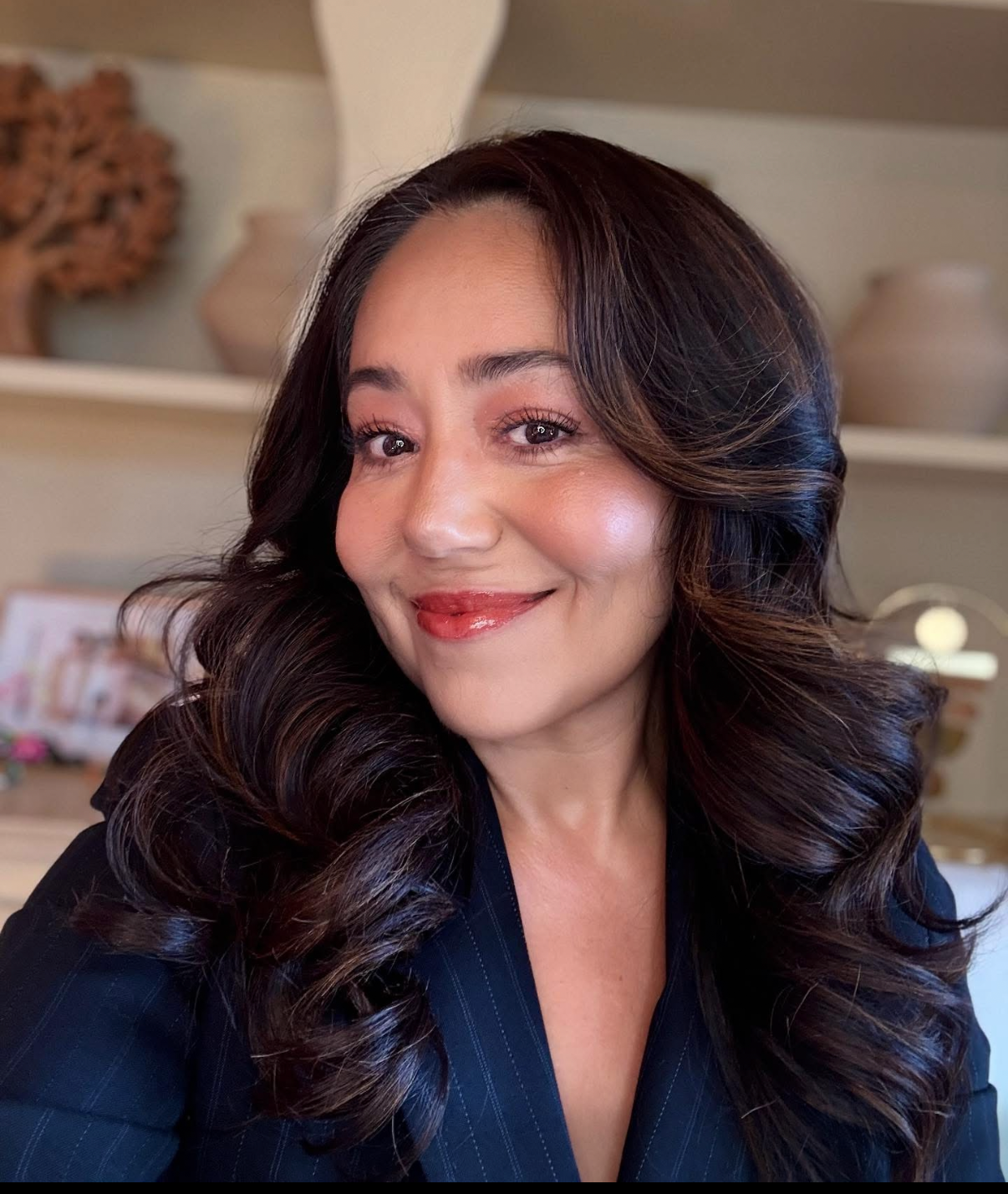
Today's conversation is with someone on paper who makes absolutely no sense. Danielle Lumen is a lawyer who became a therapist, a straight-A student who hated high school, A mom of three kids who signs up for ultra marathons and Ironmans for fun, A business owner, a risk taker, and someone who's reinvented herself over and over again without burning her life down in the process. And what I love about Danielle's story is this. None of this was accidental. She didn't drift into law school. She didn't meander into entrepreneurship. She didn't flow into mental health. each one of her shifts came from pressure, reflection, and an eventual decision. In this episode, we talk about growing up multicultural in a small town in Indiana. Feeling like an outsider, chasing perfection through grades, discovering ADHD later in life, navigating marriage while going back to school, while also having three kids at home, and what resilience actually looks like when it's not glamorous. We also get into burnout, sacrifice, endurance training, and the mental gain behind doing the hard things over and over and over again. you're juggling too much, questioning your path, or wondering if it's too late to pivot, this episode's for you. include resources in the show notes related to mental health, training tools, and books that connect you to today's conversation. Some are affiliate links, which also help support the show at no extra cost to with online therapy. They're a great resource if you're struggling and you want to get into therapy, but you don't know where to start. So, to kick off my conversation with Danielle, we'll start off on a road trip to Daytona during bike week and eventually meeting her husband in a pitch black parking lot. my conversation with Danielle. Let's get it.
Welcome to Life Between Titles. I'm your host, Sivan, and today I've got my friend, Danielle. Danielle, how are you?
I'm doing great! Thanks for having me.
fantastic. I appreciate you coming on. You know, when we did our initial call, we talked a little bit about this whirlwind of things that you've had in your life. And it feels like you've constantly had a lot of energy and investment going into your life. One of the things I want to dial into today is how the hell do you manage all that stuff? ⁓ But before we get into the nitty gritty of that, ⁓ I want to maybe start with a story about how you met your husband. It's a very interesting one and I feel like it'll give the listeners a little bit of color as to who you are. So maybe can you tell us a little bit about that story?
Yes. I can. So I was a freshman at IU in Bloomington, know, Hoosiers. And my best friend and I decided to take a last minute road trip to Daytona Beach with a girl I did not know from one of my classes and ⁓ drove my little geostorm the 16 hours, pulled up into a parking lot of the worst
huh, yeah. Of course.
Roach Motel I've ever been to. It was bike week, so there were Harleys everywhere. I had no idea. You know, I think I was smart, but I think I was naive, I guess. I was 18. And I met my husband the first night. And we talked for like six hours and I never saw his face, which was interesting. Because it was pitch blackout.
Yeah. Uh-huh. ⁓ How did that-
and there were hardly any lights except for the bikes going down the road. And he had a hat on and had given me his chair, but I didn't, wasn't thinking anything, right? We just started talking. And literally hours later.
Okay. Okay.
He asked me if I wanted to like go to Burger King. Seriously. This was in our wedding vows. Literally. About Burger King. Okay? I wrote about this in our wedding vows. And that night I got back and I said to my best friend roommate, I just met the man I'm gonna marry.
Yeah. Yeah. wow. Wow.
and she was like...
What? ⁓
What do you drink? And yeah, he moved to Indiana. He was actually from North Carolina. He was graduating from NC State. He moved to Indiana. See, I met him on his birthday, which is crazy. ⁓ And he moved here not quite three months later. And I finished school. And here we are happily ever after. Yeah.
Were you ever worried that when the sun came out, you actually saw his face that'd be like, ⁓ man, I made a mistake.
Okay, I saw his face at Burger King.
Okay. Beautiful lighting, of course.
not even kidding. I saw his face at Burger King and it was good. It was good.
⁓ Yeah, yeah. It was good enough to marry and stay married for many, years. ⁓ man, that's such a fantastic story. ⁓ I feel like that energy from that story resonates with so many things that you've done in your life. ⁓ Whether it's starting a business, going back to get another degree, or really focusing on different aspects of ⁓ professional development.
Absolutely.
I would love to maybe dive into ⁓ when you were in high school, what were you like? What drove you? ⁓
Okay, all right, so that is Danielle pre- who you're talking to now.
Right, of course, of course.
⁓ in every way. We had moved to a town called Nopalsville from Indianapolis. So, you know, it's a suburb outside of Indianapolis about 20, 30 minutes north, But Hamilton County, but it is, there was hardly anything developed. Okay? And yeah, and so I think my graduating class was maybe 300, maybe 280. So it'd be not tiny, but definitely not,
Okay, where's that at relative to the state? Okay. Okay, up and coming.
like my kids class of a thousand, right? And so I actually hated school. I did. I was one of very few non-white people. And you know, I'm multicultural, I multi-race. And so, but I didn't, my comfort level with
Right, right. Really? Okay.
that was unsteady. so going into that was like, you want to fit in, you know, want to all the things and I hadn't grown up there. And so for me, it was a lot of
Right.
trying to survive, honestly. But my father had always told me, no one knows how you're feeling unless you tell them. But he had some of the same difficulties growing up. So I knew you just act. You put on your outfit and nobody knows unless you tell them. So I focused on grades and being the best.
Mm-hmm. Yeah.
[10:21]
I was always the stand up for the underdog kind of person. Um, that's always kind of been my way. And I just went through and knew I wanted to feel better about myself. So like, yeah, you know, and I actually, I work with a lot of teens in my current career and I tell them, I feel what you're, I have felt what you're feeling and I promise you, this is temporary.
Mm-hmm. Right. Right.
and you can feel better. And so sometimes it's just hope, right? And so yeah, it wasn't great, but it definitely helped create who I am now. Yeah.
Yeah. Yeah. Yeah, that's amazing. You know, I think like, especially during those high school years, it's so hard to figure out identity and fitting in and community ⁓ and where you should fit in. And sometimes the things that you actually enjoy doing, you don't even want to talk about at school just because it you feel like you're maybe alienating yourself a little bit more. ⁓ What was ⁓ academically? Were you a good student? Like, did you get good grades?
Thank you. Straight A's. ⁓ Yeah, but the expectation was straight A's. ⁓ I was the, you know, the oldest child, but when I was, I didn't have siblings. My siblings are 12 and 15 years younger than me. And so, you know, many of those years were up until high school was an only child. And the expectation was A's and A pluses. ⁓ You know, I think now
okay. Right. Right.
I got a dollar in A. I mean, I think that was not really fair.
I think I got the same thing. I think I got the same thing.
I'm a from the proof fairy. ⁓ But I kept a grade book of all my assignments. And that's something that has really impacted how I parent today and how I counsel today. Because what we don't recognize is people can do their best. And their best may be different than someone else's best based on a number of factors. so yeah, I got sidetracked. But no, I was a straight A student. ⁓ didn't feel like I could not be.
Yeah. there, was there, it seems like there was a lot of pressure, ⁓ from the family to do that, or was it more internal pressure? Like, Hey, I've got to excel.
It started from ⁓ family and it wasn't like, you're not smart if you don't. was the world is a difficult place. And these are the things you need to do to set yourself apart. And I believe that some of that is true, but setting yourself apart can be done. I recognize in ways that have nothing to do with academics, right? But I some of most successful people I know, you know, they didn't go to college, they didn't get good grades. They're great communicators, right? So, but you know, I think as parents, we were afraid of difficult struggles for our kids. And so we try to set them up the best we know how. you know, for my, primarily my father, it was, you know, grades were...
Yeah. Yeah.
very important for getting into college. And that translated to very high pressure that I put on myself.
Yeah, I feel like when I was growing up, that was an expectation as well. And now that I have kids of my own, there's a lot of the same things that I think my parents went through with me. I'm going through with my kids in that there really isn't another baseline of what success looks like academically as a kid, besides those grades that you get. And I think nowadays, you know, there's different types of teaching and there's different, you know, school formats and people learn differently, whether it's online or through more vocational sort of like things. But I do wonder like, you know, when, let's just say back in like the 70s and 80s and 90s, ⁓ what were some of the things that drove you to study harder? Was it just like you wanted those grades or did you enjoy reading? Did you enjoy, you know, doing math, science? Like, was there sort of natural... ⁓ questioning of the world that you like to do.
Yeah, so I loved reading, but you know, I read the Hardy Boys.
Yeah,
Sweet Valley High, you know, they
yeah, yeah.
weren't like academic level reading, know, kind of flowers in the attic, you know? But, and I still love reading to this day. And I think that's something that is missing for a lot of kids now. But it...
Right. Agreed. Agreed.
Grades? Grades was about being enough. ⁓ You know, not, I didn't want to disappoint. Right? And I, I certainly don't, you know, my parents know how I feel. And I can tell you a story about how they figured that out. ⁓ But I... You would I change it? I don't know because I'm here who, you know, I'm where I'm at. But at the same time, I mean, the angst that I felt during some of those years, not good, right? And I definitely didn't want to let them down. I really, that was something that I carried and did not take lightly.
Yeah, that invisible pressure, can definitely understand that as well. What did your young adulthood look like after high school? Early 20s, late 20s, what did that look like for you?
Uh-huh. Yes. So I went straight to law school ⁓ after I graduated ⁓ college. And I always had jobs. So I worked ⁓ a really cool job while in Bloomington, ⁓ which I loved for the newspaper and did a lot of marketing and sports events. And I worked out a lot. That's always been a big part of my life. And then I moved to Indianapolis. for law school and ⁓ you know, worked, to law school. And yeah, I mean, the first, my twenties were working, work hard, play hard. Probably played a little too hard. ⁓ Worked hard, played hard and worked out like every day of my life. That's always been like my thing. ⁓ And yeah, spending time with my
⁓ Right. Yeah.
now husband who was my boyfriend at the time. yeah, I mean, I had a pretty good time.
Yeah, it sounds like it. I mean, it sounds stressful, but you know, it sounds like you have that you have that balance of this outlet of working out plus high stress environments of getting a law degree. What made you get the law degree? Like, was there other people that you knew that had it and you're like, I need to be like them or something else?
So again, it was sort of a given that undergrad wouldn't be enough.
Okay.
And in order to differentiate myself from other people that had done well in college, what can I do to set myself apart? Law school, get my MBA maybe, those were sort of the things. And I had always had a very ⁓ big interest in criminal law.
Mm-hmm. Right. okay. Okay.
Yeah, so my original plan was criminal law. And, you know, we had family friends, ⁓ one in particular who was a prosecutor. ⁓ And then he was also a sitting judge in criminal court. And so I was able to hear about that area. And my goal was to be a criminal defense attorney.
Thank Wow. Okay.
Yeah. And most people are like, what? ⁓ You want to defend those people? And, know, once again, I feel like that underdog mentality comes in and I'm like,
Yeah. Yeah.
Can we try to remember that the presumption of innocence? Right? mean, and if, if not me, who? Like not everybody's guilty. and there's a process, you know, a judicial process and people need to, you know, they need their day. And for me, that was important. and, but I just happened to get a job.
Right? Right?
[20:01]
or I was a law clerk and it translated into a full-time lawyer position where criminal never, it just never happened.
Yeah. At what point during your law school did you decide criminal law was the way to go? Was it towards the end or in the beginning?
No, that was a big part ⁓ of my... like because I, it was like I knew if I was gonna be a lawyer, I wanted it to be something I loved, right? And so for me, it was going into law school. The criminal components, they were my favorite classes. ⁓ I, you know, that takes me back. I always loved doing speeches when I was growing up in school, which is odd, I think.
Okay. Mm-hmm. Yeah, I was in speech and debate too. I loved it.
I loved that and every speech that I wrote that was more research oriented that wasn't debate focused was based on some type of criminal behavior.
Mm-hmm. ⁓
Gosh, were these teachers concerned? ⁓
Right.
You know, but now it's like, you know, so many criminal based shows and podcasts. And I think that there's a lot of interest in that, but I was interested before like the internet existed.
yeah. Right, yeah, no for sure. I I listen to a lot of like murder mystery podcasts too, and I think the thing for me is trying to understand the psyche of somebody who would do these things. And it just hooks you because you're like, how could this even happen in the world? And it's a unique story every single time you listen to one of those things.
Yes. Yes. It is, it is and that's where I was going. It turns out that I ended up in like sports and entertainment contract law, which was interesting too, different, but yeah, I mean.
How did you make that pivot? That's a very different, you know, very different ⁓ field.
Well, it's interesting. So I've always been very into ⁓ competition, sports, running, training. And so I ended up my undergrad, it started out in business, but it ultimately landed me with, had a bachelor's of science in kinesiology, sports marketing, with a minor in business. And so when I,
Okay.
became a law clerk at a local firm who represented athletes and celebrities. And I negotiated contracts on their behalf. It just, that was where I landed. It was in Indiana. It had a global presence and they gave me a lot of... ⁓
Yep. Yep.
liberty to learn so many different aspects and I, it's where I stayed for like nine years. Yeah. Yeah.
Wow, that's a long time. That is a long time. What was the most stressful thing about negotiating those contracts?
The fact that I was like 25.
And those contracts are massive too, right? Like, they're big.
and these people are 50? I mean, they don't know, but like, in my own head, they knew.
don't know if I could do that as a 25 year old, like that much pressure for somebody's livelihood because how often does an athlete negotiate contracts? Probably every couple of years maybe if they're lucky. Is that right?
So that would be true except for the athletes that the majority of the athletes that we represented were deceased.
⁓ wow! How did that work?
Right? Babe Ruth, Arthur Ashe, okay? Marilyn Monroe, James Dean, those were the clients. So you're dealing with the estates. And you know, can, technology, you can have a commercial nowadays and Marilyn can be in it based off footage and AI. They didn't have that to that degree, but there were a lot of things that could be done. And so you were dealing primarily with trusts, attorneys, children.
I see. I see. Yeah. Yeah. Yep. Wow. That is, that is something. Yeah, that's crazy to me. I mean, that's something I never think about, but I guess you do need to have experts like yourself back in the day to do those type of things. Wow. But you're not doing that now. How the heck did you get from negotiating these contracts to being a therapist? Fill me in on that, that gap of time.
And some people need more money dead than alive. ⁓ yeah! Yeah, absolutely. So I ended up You know, I'm somebody that apparently likes a little chaos. ⁓ And I am. you know, so during my time there practicing law, I had two children. And I became very interested in, ⁓ you know, everything children, right? I'm a new mom and you know, and so I wanted to design baby clothes. So I, you know, had a little baby boutique while I was practicing law.
Are you a chaos goblin? Uh-huh. Yeah.
And then, ⁓ you know, my children got older and, you know, I just, I wanted to spend more time with them. you know, ended up having my third. ⁓ Wonderful surprise, he knows this. And.
Thank
You know, so I stayed home. He was my last. I was home for like a year trying to figure out what I was doing. My oldest was going to be starting kindergarten, I think. And so we had moved over to a different area where we wanted him to go to school. And. I so I stayed at home and I just was like, what am I doing? Right, like literally trying to figure out. What?
Mm-hmm. Uh-huh. Uh-huh.
life was supposed to look like. Right. And I had done, I mean, you know, that's a question I think a lot of us experience. But I'm somebody that like, while I'm practicing law, ⁓ I tried I threw a couple of running races, I was like, maybe I want to do events. ⁓ I was like, no, that's hard. Not a lot of payout. I love running. I don't like helping other people. ⁓
Right. Yeah. Yeah
So I'm like, scratch that. You know, I designed children's clothes. I opened a boutique. I loved that. But like that is like around the clock work. Right. I'm like, OK, probably not the best long term thing. Sold off all those assets. Then. My husband designed a product. He's an engineer.
Right. Mm-hmm.
And of course I'm the risk taker usually. This time it was him. And I was like, probably not as supportive as I should have been. And I recognize this now. It blew up. His product blew up in a good way. Like one of those commercials where you're like, you launch the product and you're like, oh, this will be okay. And next thing you know, it's like ding, ding, ding, ding, ding, ding, ding, And it's like selling like crazy. And we had to bring staff in and.
Mm-hmm. Yeah. As in a good or a bad way? Okay. Right?
Like he had to quit his other job and it was nuts. It went really well. But it's called the pick punch. It's a he's a he was like a guitar player for fun. And he would make guitar picks out of like credit cards, IDs. And he was like, what if I had a punch that I could recycle key cards or credit cards? So he fabricated one.
Wow. What was the product? What was the product? Mm-hmm. Aha!
then found a manufacturer, made it, it blew up.
Yeah. Wow. I could see that.
blew up. But I'm gonna tell you what, the infringers came out of the woodwork.
I believe it. I believe it.
It was pretty traumatizing actually, know, the lawyer fee, you know, that's a toll, but it was really good. But, you know, our kids are growing up, we're experiencing, you know, a little bullying with our oldest, trying to figure that out. He had his own, you know, dealing with that, you know, mama bear not wanting to like scare people.
Mm.
trying to figure out how to handle that. And COVID happened. And it was a struggle. And there weren't enough counselors around. And I started really thinking, what do I want to do with this one big, beautiful life of mine, right? And I started thinking about when I was young,
Right? Right.
And I was experiencing bullying, which I had shared. like, I hated high school, you know? And I used to dream about, I remember after my freshman year and I was dreaming about going back my sophomore year. like what would it look like to walk into school my sophomore year and be like in the movies whether it was I look different I felt different everyone wanted to be my friend
[30:06]
Right. Yep, pull in with a nice car, all that stuff. Yeah. Right.
All of it. Like the movies, right? And I started thinking, obviously that's movies. I knew that. What would it look like to be somebody that could help somebody feel that way?
Mm-hmm.
And did that exist? My daughter needed it. I always needed it. Couldn't find it. I went back to school.
Interesting.
I went back to school.
So what did that look like when you threw down the hammer and said, I'm going back to school because at this point you've got the kids, you've got the husband, you probably have either renting or bought a house, you have expenses that you didn't have before in your 20s. What did that look like for you going back?
Yeah. you know, different because what's strange is grad school on that level was far for me, maybe it's because of law school was far easier than like undergrad. But I think that I guess easy is relative because I had a passion. And I think when you're studying something that really like hits your heart in a way, it just like, you just remember it, right? It just made sense.
⁓ Right.
And so the whole learning, the academic part of it was way better than any schooling experience I'd ever had. And there was a different level of energy and I was much older than my peers in school. So, I didn't go in like how I felt in my other school experiences. I didn't feel like the underdog. I felt like the mom with life experience.
All right.
I come on, right? And I volunteered at some of the local schools with kids that needed a mentor to make sure that I wasn't gonna hate it.
Right. Good, okay. Yeah, that's a good way to test it before you went all in.
Yeah, I mean, I love my kids, right? And I love certain people. But can I, with total strangers, sit there and attune to them? Right? And I did that for a couple of years. And I just knew. It felt right. It gave me like just a real... And that was obviously for free, right? I... It was like I'd won the lottery. That's how that felt.
Right?
to do something that like paid me in purpose, right? And so I was like, I'm on the right path. I was still working and school. So trying to do those together is, it's tough, right?
Wow. Right. Right. Were you working the lawyer job or were you helping your husband or were you doing the boutique stuff? Which one were you doing?
I gotta remove. So my husband, yes, definitely helping my husband. so my parents company, which I'm still involved in, ⁓ I handle operations for that.
Way back
And so, and I still do. And at that time I was doing it as well. You know, there were people that knew I was going back to school, but I, I believe that I don't need everybody to know what I'm doing to to know what's right for me. You know and there are some people I actually read this quote to a client earlier today and I said what does it say some people will see your candle and want to blow it out and others will bring a candle right it's like don't don't surround yourself with candle blower outers.
Absolutely. Mm-hmm. Right. That should be a shirt. Somebody make that shirt. We'll sell it here on the podcast.
Yeah. Right. I mean, I think I found it for Brene Brown, right? Like I love her, but I did not want somebody to tell me what I knew I was doing wasn't right. And so a few people knew and it grew because I was so busy all the time. I didn't have a life, but now everyone's like, it's, know, my gosh, it's amazing. But yeah.
Yeah. What was, and I love that story because it captures a lot of the things that people that listen to this podcast are experiencing now. What was life like for you trying to juggle all these things? Were there days where you were just like, fuck it, that's it, I'm done. Or what did that look like?
Yes. Yeah, so there were days like that. ⁓ So here's something that's interesting. ⁓ Like I said, I've been with my husband, think 31 years now. We've been married like 27, 26 years. Thank you. And it was really a test of our relationship, right? Because three kids, a home, he works, I work, and I'm in school. if you don't communicate, that can be really difficult.
Yeah, I can imagine.
Right? that was something that had to be addressed. And then my kids, trying to calm the voice in my head that says, who are you doing this for? Right? And doesn't speak me a bad mom for taking this extra time that I need to pursue this. Right? I mean, because that's something that happens.
Mm-hmm.
and But yeah, mean, so was very stressful, but you know, I work out every morning without fail and ⁓ with, you know, my best friend. so it was, that was my get up. I felt good. I remembered why I was doing this and that I would be able to make a difference and just try to, but stressful. mean, you know, late nights at my age was way harder than late nights as a 23.
Yep. Yep. Yeah, ⁓ believe me I'm in bed by 930. It's all good if I can I can do it ⁓
I mean, I was crying. Yeah, I discovered I have ADHD.
Oh man. So you discovered that later on in life. How did you discover that? Was there an assignment where you were like, I can't finish this damn thing. I need to figure out what the fuck is going on. And how did you go about helping yourself?
⁓ my own kids getting assessed.
⁓
Right? People do not, and that is something that I advocate for. I mean, it is a passion of mine. ⁓ For women, primarily, you know, we often experience late life diagnosis. ⁓ You know, there is this stigma. It's changing about, it used to be ADD, right? That is no longer, it's ADHD. And, ⁓
Right?
What people think about is the kid that is not in control, poorly behaved in class, running around and sit in their chair. And is that accurate for some? Sure. But not because they're poorly behaved, because there's something else going on. For me, I wasn't poorly, I mean, I wasn't running amok. I was too scared about being the favorite student and getting an A, right? Like I wasn't doing that. But
Yeah.
For me, while I'm doing my work, I'm also trying to solve five other problems at the same time. So, you know, it's like if I was a computer screen, I have 12 tabs open. And so trying to stay focused on the one, right? ⁓ And just like, and so for me, that was, it wasn't hyperactive. It was inattentive this.
Yeah.
Now keep in mind, no internet then, no phone. ⁓ You know, so I didn't have those built-in distractions, so nobody knew. But when I got older and was diagnosed, all those things existed. hearing my kids and the things that they needed to cope, studying with music on, studying with the TV on, ⁓ I always studied at a bookstore with noise when I was in law school because I needed the noise.
Right. Yep. Yeah, for sure. I did too. I did too, 100%.
Right?
Yep.
When I was studying for the bar exam, same thing. otherwise I'm going to go sleep. When I realized the things I was experiencing were ADHD and I got assessed and on the right medication, it was like, shh, life changing. Because one, I knew how to work to overcome some of my struggles, but I had a lot of strengths that
Life changing. Life changing.
people with ADHD only have, right? I can multitask like nobody else. And so when I figured that out and got school and time and life, it was a lot more, time management.
Yeah. You can do a lot more. Yeah. Danielle, I want to ask you about, something that one of the listeners had sent in. And I think it's actually a pretty good segue to what you were talking about with ADHD. ⁓ and, ⁓ I had, ⁓ told them that you were going to be a guest on the show and I said, Hey, is there any questions you want to ask her? And one of the questions she sent to me was the. this idea that we live in now where we have access to all this information all of the time and we're able to contextualize our life with greater information and language. But, you know, the drawback to that is a lot of times we don't know what to do with that information, right? And ⁓ as a mental health provider and as a therapist, how do you help people sort of bridge that gap of like, I've got all this stuff that I'm consuming and I'm learning about, but I need to figure out a way to do something with it in my life. Like, how does that happen?
[40:58]
Well, I think it's uncovering like, how are we acquiring all of this data and information and why, right? Like, so are we doom scrolling ⁓ and, you know, the algorithm is leading us down a particular path. Are we intentionally seeking out, you know, dream careers or, you know, I think that we have to sort of like, like slice it a little thinner and figure out what information are we getting, where are we getting it from and what led to gathering this particular information, right? So, ⁓ and the thing is, some people might say, you know, I don't know, it's just something I've always loved. I have this huge interest in it and it speaks to me. That's different than someone, ⁓ you know, I don't know, for some directive purpose, seeking out information, right? So, because many people, when they figure out a career, it usually isn't their dream career, right? It either happened because...
Great. Great.
They got an internship and it led to something. It was too good an opportunity to pass up. then years go by and here we are. Right. ⁓ And often when something happens like termination or some life change is the only reason we start considering. Options. ⁓ And. You know, and so, yeah, I would need to know, like. Why do you have all this data? You know, what are you looking for and where did it come from? And then once I know that I can kind of dig in a little further and either tell them stop looking at the X, Y, right? Because we've got to be able to, you know, make these decisions from a place of authenticity, like what we want, not what dad wants, not what husband wants, not what.
Uh-uh. Yeah
we think everybody else thinks we should do, right? Yeah.
That's, you know, that journey of trying to understand what we want is sometimes the hardest one because at times you don't know what it is that you want, especially like, I think for listeners of the show, they're at this crossroads of, you know, they could potentially start their own business, they could go back to school, they could look for the same type of job, ⁓ maybe they could take some time off if they're fortunate enough with their finances. ⁓ But for people that... you know, are struggling to figure out what they want in life, what do you recommend are some things that people can do to maybe say, okay, hard reset, here's a few things that I can do to maybe get to that point to understand that a little bit better for myself.
Sure. So, you know, as much as I would like to leave out certain questions that are based in reality, like bills, expenses, right? You know, those do play a part, right? That doesn't mean that those have to be roadblocks, but
Yeah. Yeah.
we, it at least helps us understand where we're starting and what we have to work around. ⁓ And often when people, you let's say they're working a job that it's a mean, it's just a means to pay the bills, right? And they are very unhappy and they're trying to find happiness, right? ⁓ I want, know, for me, it's a lengthy process. I what does happiness look like? ⁓ it money related? For some people it is, that's all they know, right? And I think we can just turn on the news of any celebrity or many people with money and clearly money is not the end all be all. You know, there's far more to that. But is it,
Mm-hmm. Right?
something that makes a difference in other people's lives? ⁓ Is it something that makes you feel you've made a difference? Right? I mean, we have to get really to the core of people when they were still dreamers, before they were overly impacted by
I love that.
the expectations of the world they live in or grew up in, right? We all are a result of the various environments that we are exposed to. And that varies based on culture. Do you consider the family before yourself or not? I mean, there's just so many factors, but
Right? Right.
some people don't even know themselves. They've spent their whole lives ⁓ not that they forget, they don't know. And so for me, often it's like we're talking about memories when they were five. And I mean, literally we go that far back sometimes if we, if that's something that would be helpful and people light up. you, if money didn't matter, what would you do the rest of your life? Right?
Right? Mm-hmm.
⁓ And we start there. And here's the thing, if money does matter, how do we still bring in some of the joy from that thing and find fulfillment? Because just because you can't do it full-time doesn't mean you can't do it part-time. Right? I mean people need purpose. They need connection. They need meaning.
Yeah. Right? Right?
And if for some people, that's animals, you know, save lives at the shelter, foster an animal. ⁓ I think people think, ⁓ that won't be enough. How do they know that? How do they? ⁓ And you meet people. You know, you don't know who you're going to meet. And that has just been my philosophy my whole life. It is never too late.
Yeah. Yeah.
it's never too late.
Yeah, mean, you're a testament to that 100 % with all the different things that you've tried in your life. ⁓ How do you sort of like get over that analysis paralysis of committing to something? Because a lot of times, and I know I do this too, I'll have a great idea of something I would love to do at some point, but there's always something. I don't know enough about it. I don't have enough connections. I don't have enough time. I don't have enough money, whatever that may be. How have you in the past, and maybe not even as a therapist, but like as this professional that's evolved over all these years, how have you sort of gotten over that to be able to do these things that you've naturally enjoyed, but also have become successful?
So I've always been okay with failing except for my grades. Right? Because you know I've never looked at that those types of choices like trying a career and then deciding I didn't like it as a failure. I learned something I didn't want to do. Like I just didn't know
Yeah, I love that. Right. ⁓
That wasn't part, I mean, that was one of the greatest things I think I took out of ⁓ like my upbringing, right? I mean, my parents were entrepreneurs. They worked full time and started their business at night and in the third bedroom of our little tri-level. And I remember hearing my mom cold calling while it was allowed, starting with the A's and selling their service. And so, ⁓
Mm-hmm. Mm-hmm.
And they worked and eventually, you know, through time they were able to have their own thing. And so for me, it was like, well, you don't have to like quit one to start the other. You just do it at the same time. I mean, that was just what you did. Right. And I think that we're all capable of that. We just don't think we are, you know, ⁓ you know, whether it's get up an hour earlier. Does that suck? Yeah.
Mm-hmm. Right.
[50:12]
⁓ Does your body feel more rested from six hours to seven? Not really. I mean, you know, I wouldn't want to do it super long term, but we have to ask ourselves, am I making these excuses? Right? And often we are, you know, certain making certain excuses. So, ⁓
Right. Right.
You know, like I said, I've started businesses. I have licenses. I became a real estate broker. ⁓ I'm an insurance broker. I retail stores. But you know what? When I tell people that, they're like, my gosh. They're not like, what a waste of time. And even if they did, I don't care. But ⁓ it makes me a great conversationalist at a party.
Yeah. Right. No, absolutely. Yeah, no kidding.
Right? mean, how do you know what you don't know? mean, you risk, I guess, some time and money. But isn't it what keeps us young, like learning? think it. Yeah. Right. It keeps your brain functioning. One day I won't be able to do things. ⁓ And so it's just a reminder that if not now, when? Yeah.
Yep, meeting new people, learning new things. I completely agree with that as well. Yeah. Yeah. I want to pivot a little bit, to, you know, we talked about trying to do things in parallel, trying to figure out how to tap into the things that you're passionate about and maybe volunteer or get paid on the side. And then eventually it goes well. You can do well with that as a profession. There are times though that many of us feel
Mm-hmm.
burnt out because we're trying so many things. What are some signs for the people that are out there that are trying to do all these things that can lead to people burning out and can lead to people really being detrimental to themselves trying all these things? And how do you identify those things?
So, ⁓ yeah, so that is something that's so important. I'm glad you asked that. ⁓ For me, so speaking from my own experience, and I think it holds true professionally as well. I have to have a conversation with myself. If you're not finding, you know, when you start something new, typically there's excitement in starting something new for a lot of people. know, motivation, ⁓ you know, like they have more energy when they're excited about something, right? Now, keep in mind that it's something that they want, not something somebody else wants them to do. It's what they want. And there's a level of excitement about that learning something you know people are talking about it I'm doing this I'm taking this I'm they're excited there's usually a point where it's like instead of excitement you're like
Mm-hmm.
and like, ⁓ dread. And I now the first side of that, am I going to go? Yeah. But I'm going to say, am I sleeping? Am I eating? Am I taking care of myself to make sure the burnout is not like wellness, self care related? But if it's passion, like it. And when I say, you know, and I think we talked about this before,
Right. Mm-hmm.
Typically things you start, you can't start it like, I'm gonna make so much money.
Right, absolutely.
Right? Like the money can come, but you have to have passion and interest and like a desire to want to do that for nothing else like joy. And so when that early on. It feels like a stressor and like a ⁓ I I'm usually going OK. Somebody's telling me something and if the mind isn't telling you something.
Mm-hmm.
Your body usually is.
Yeah. Yeah.
Right. And.
Because the reactions in your body are...
If I let it go, I feel better, I'm done.
The reactions in your body are usually sort of that lagging indicator, right? Because you're going to get stressed out. For me, I know that when I feel stressed out, I usually will notice it, but then a couple days later, my stomach will hurt or I'll be sore or whatever. And it just takes a little while for all that stuff to compound. Sports and exercise is very important in your life.
Yeah. BOOM!
⁓ You do a ton of ⁓ ultra marathons, I think a couple of Ironmans. ⁓ What is it about physical activity that is so beneficial to people that want to do maybe the things that you've done in the past, which is start a business, get a different degree, start a family, all those things? What has exercise played a role in in your household and for you specifically?
Mm-hmm. Thank ⁓ Sure. So, interestingly, ⁓ growing up, I think from the time I was like 12, if I can recall, it really occurred to me to work out. Fine. Yeah. You know, in my younger years, I did some, I don't know what you would call it, modeling. think it makes me laugh when I think about it now. ⁓
Uh-huh. ⁓ okay.
you know, you know, little things that they do in Indiana, whatever. ⁓ But I was like 80. I was a freshman in high school and I was 83 pounds. OK. Yeah, it was very thin. And ⁓ there had one of the places I modeled, somebody had said to me that I needed to lose five pounds. I'm like, in high school, I'm like.
Right. Wah. my God. Yeah. Red flag.
Right? Red flag. So for me, that really sort of triggered workout even more. Okay. So like it started out not on a healthy track. Right. But as I was in track, I sucked. I was a terrible runner, but I did it because my friends did it. We used to literally run during cross country seasons to McDonald's. We would get a Big Mac. We would eat it and then we would run back.
Yeah, absolutely.
It's no wonder I was so terrible at cross-country, but ⁓ terrible, but I My friend Sarah hi, she's gonna remember that story. She was my partner. Yeah So But that was the beginning for me of recognizing that running wasn't I loved running but I needed something else because the running sort of fueled the unhealthy for me
⁓ man. Yeah, amazing. Good job, Sarah.
body. That one comic that person said to me landed. Okay. And so I started strength training. There was one gym and I had to drive to it and I loved what that did for me. So competing, it literally started from there. I mean, I was great stuff aerobics. my goodness. ⁓ All the things and
Right. Yeah. Yeah, I love that.
It just evolved from there. And I got to a point where it was like, I loved working out, but what was the point besides being skinny? I hate that. And so for me, I needed something to work towards. And I signed up for a race.
What was your first race?
and 5K, brutal. But then it was 10K, then it was half marathon, marathon. And then I was like, okay, triathlon.
Yeah, that's a good one. Yeah, wow.
So I signed up for my first triathlon. I grew up swimming. Put yourself in a lake and you don't know what's touching your leg.
huh. Yes. Yup.
Panic. Panic. Punch in the head.
⁓ so you did you did track and you were a swimmer in high school?
So I swam before high school, competitively. I wasn't that good, but I knew the strokes. You know what mean? Like I was comfortable swimming. ⁓ My mom did not know how to swim. So very young, she taught, got me in lessons. She was afraid. So, ⁓ but yeah, my first triathlon disaster. So I signed up for masters, which is an adult swimming, ⁓ competitive swim training group. And
Okay.
Then I did like so many and I ended up doing like five Ironmans with my sister. Yeah, ⁓ but a lot of negative experience on the They don't like people on bikes, unfortunately.
Wow. Yeah, that's crazy to me. I I actually love the fact that you, and it's so on par with your story that you've told me so far. You go and do this Ironman, it didn't go well, it was part of the swimming, and then you sign up for this master's class. You didn't just go to the YMCA and just start swimming a little bit more. You literally invested in yourself to do that. Did you feel like that helped out at all, or was that a waste of time?
[1:00:14]
⁓ yeah. mean, you you're in a pool like an Olympic sized pool, right? So I knew I could swim two miles nonstop, right? Because the distance. So you had to get comfortable with being punched in the head in a dirty lake. So that was so then it was just like a lot of training in the lake to where I got over the fear of whatever was touching me.
Yeah, ugh, no thanks.
Right? And then swimming was probably the easiest part from then on. But yeah, and then I got kind of burnt out on that and then decided to go back into running. ⁓ And then it was like, ⁓ know, under miles, that sounds fun.
Yeah. Those ultras, man, like, I don't know. That's a lot of hours training. I wanted to ask you, so I did a little bit of running back in the day as well. Never any ultras. think I just, cut it off at marathons. One of the things that I struggled with was trying to balance the time of being at home with the family and preparing for the races. How did you do that?
Yeah. I got up at like four in the morning.
Yeah, okay, that's what I did. Yeah, I ran to work and then I ran back from my office, which is about eight or nine miles. Yeah.
Seriously. That was literally when I was. The I think the craziest part when I would have to I had to run a 50 mile training run. And it's like, literally I would like drop the kids off at the bus and I would run for like five hours.
I'm still out here, honey. I'm still running.
huh, seriously, but I would have to, you sometimes you had to take off work. Sometimes it was like four in the morning to nine in the morning. I that was the sacrifice that was required.
Right, right. And I actually love the theme of sacrifice. Like it's one of those themes that keeps coming into my head as we're having this conversation. The idea of sacrificing something so you're getting another thing and the other thing is sort of an unknown. you don't know if you're gonna finish that race. You don't know if you're gonna do well. You don't know if you're gonna graduate with that degree. How have you sort of like gotten over the unknown and the anxiety of sacrificing as you progress through your life.
You know, I mean, I... When I needed to, you know, find more extreme time for things, right, which isn't every day. For me, I knew, like if it was time for training, it was in the morning and I tried my best to get it done before the kids were awake, right? But if they were aware of what was happening, I said,
Mm-hmm.
I'm doing this because it's important for me and you need to know that it's okay to have things that are important to you, right? I mean, for me, I wanted them to know that like, I never want you to lose your identity and the things that make you feel good. And so they've grown up kind of knowing that like, I'm not choosing myself over you. I'm just, you know, it's like if you're on a plane, what do they say? But you're asking your own oxygen mask on first. I mean, like you have to take care of yourself.
Absolutely, Yep.
to take care of other people. And I believe that applies across the board. in ⁓ terms of risk or not knowing how things are gonna turn out, I've just always been okay if they didn't turn out. I would, I.
Yeah, that's beautiful.
If somebody asked me and it didn't work out, would say, you know, I'd rather have, you know, it's like the love thing. I'd rather have loved and then learned than to have never loved at all. Right. I just you don't know what you're going to experience or learn if you don't try. And that doesn't mean it's failure. It's just like. I just know myself a little better and that's it. It's a good story to tell, right? If nothing else, there was one race they didn't finish and it was an amazing story to tell. I'm still mad I didn't finish, but I'm not like embarrassed about it. It was a half Ironman in Tennessee. I don't even think it's around anymore. It wasn't an Ironman brand. It was something else, but a lot of people I knew did it. ⁓ It was in May and the weather was supposed to be, it had always been like 70, 80.
absolutely. Which one was that? Which one was it?
⁓ no, it was like 40 and torrential downpour, but the water was like, like where it was wetsuit legal. ⁓ I made it to, I started hallucinating on the bike.
Right. man.
And I kept telling myself, ⁓ I mean, I was very thin, right? And because I was at peak of training ⁓ and I just didn't have the body mass. didn't have the, I mean, I had sleeve warmers on, but like, just didn't have the core meat to keep me warm. And I made it to one mile before the end of the bike and I fell over. I was frozen to my bike.
Yeah.
They took me by ambulance to the hospital and ⁓ my body temperature was in the 80s.
Ugh. That's crazy.
and they were like, were you trying to die? I was like, no, I was just trying to get to the run because I knew I would warm up.
Yeah. ⁓
You know, I wasn't thinking rationally, right?
Right, right. I mean, at that point too, you're like, I've already committed to this. I've done the training. I felt the pain of this 90 % of the way, and I just need that extra 10%. And it's it's damn hard to quit. I mean, I don't even think you'd quit, right? You just like fell over. You're just like, fuck it. ⁓ okay, okay. Wow. Yeah. Right.
I did. Yeah. I know I just fell over. Look, I didn't quit. I was forced to quit because I was going to die. But I, you know, you know, and those were races weren't near as hard as like the ultras because in ultras, as runners know, you can often lose control of many things. And you're, if you have to go to the bathroom, you're going in on a dirt and you're digging a hole and then you're covering it up and you're the whole thing.
Yeah, for sure. Yep. I mean, some people just go in their pants, like.
Yes, but you can't do that for a hundred miles because you will not have skin left. Right? So you're, yeah, it's just a whole thing. You don't even care about what you do in public in those races. You got to go, you got to go. So, but I'll just tell you a funny memory or story. Quitting that usually, I mean, medically there's some things you should quit, but usually your body.
Yes. Yep. ⁓ Right.
is like things that can't handle it, but you can because you train for it. And I always told myself.
Right?
I will mentally, I'll never, I can get over it. The race quit, it'll feel great, but I'll never forgive myself for quitting because I knew I could do it. It's just hard, right? Hard. ⁓ But yeah, the most rewarding experiences ever were during those races. Do you know who Dean Karnazes is? Okay, so he's like the, ⁓
Yeah. Yeah, it's damn hard. It's damn hard. No, uh-uh.
He's man, not millionaire, marathon man. He did like 50 in 50 days. Like he's got lots of best-selling books. Yeah. So he's been in a couple of races that I've done, right? And he's kind of known for not having like the lactic acid, the pain, and just powers through. Like he's pretty amazing, super nice guy. But I was sick on a race and I'm over in the woods by a tree and he ran by and he was like, hey, do you need some baby wipes?
yeah, yeah, I didn't know the name, but yes, I've heard of him. Yeah, for sure. This powers through it. Thanks Dean!
Thank you. And I'm like, did you see who that was?
I know. That means you were ahead of him in that race.
i was but i was sick that morning
Yeah! That's amazing. Yeah, that is amazing. That is amazing. mean, you know, for me, like running, I have this very addictive personality and I apply that to so many different things, whether it's running or working out at the gym. I used to play a lot of disc golf, went from zero to a thousand, ended up owning a store that sold disc golf things, you know, ran competitions. It didn't matter what it was. I was always that person who was just like, you know, all or nothing, but with running specifically, it was a such a huge commitment of my life. And I don't know what it was, but one day I just woke up and I was like, no, I don't think I'm going to run anymore. I think I'm good. You know, we want to the next half. Danielle, I want to spend maybe the last, you know, 15 minutes of our time together and talk a little bit about reflections.
Yeah
[1:10:06]
and maybe some of the things that you've learned throughout the years. This could be either as a therapist or a mother or an Ironman, whatever it may be. But as you sort of like are working through your practice now as a therapist, you probably interact with a ton of different people, kids, adults, ⁓ you name it. What have these interactions with these people taught you about resilience and taught you about people in general and humanity in general.
You know, I think more than anything. ⁓ You know, I think that it, excuse me, has made me eternally grateful for my marriage, right? ⁓ You don't often realize how blessed you are, kids, family, whatever. And it's not because like anybody should compare their ⁓ experiences to somebody else, but it definitely makes me, you know, I'm blessed.
Right.
Right? Like for me, that's like how I look at things for me. I certainly don't like compare clients to one another for them, but. reflections. I think what I realize is that we often hold people We make assumptions about people and the decisions they make or how they act or the words they use or the choices they make. And we think it's just this thought out choice that many of them are making. And more often than not, is Not that simple, you know, they are. ⁓ They are a result. of everything they've experienced in life, everything they were told. ⁓ It could be, you know, three generations deep of substance abuse or ⁓ trauma or... ⁓ And often when you help people understand why they are the way they are and that they actually have
Yeah. Yeah.
the power within themselves. Freedom, power of choice.
Mm-hmm.
to change what their life looks like, whether it be the same day, tomorrow or in 10 years, things change for them. ⁓ And people need to know that. People have a narrative of what their story is or who they are. And that narrative often is not really accurate for them. It's a story of what maybe they've been told or like, you know, a of chapters, but it doesn't account for everything else. And then when you, when they recognize that, they're like, ⁓ my gosh. And they build a little confidence, take a little risk. Sometimes life looks different, right?
Yeah, I love that. ⁓ For the people that are listening that are silently struggling right now, whatever situation they're in, but they're still functioning, right? They're still trying to unemployment. They're still dropping their kids off at the school. They're still doing the things they need to do to function. What would you say to them right now?
Yeah. Go to therapy. ⁓ If you can, right? ⁓ And I think that fortunately in this day and age, there are ⁓ places you can go. You you could go to top of the line clinic in your town and a therapist there could be amazing for one person and terrible for another, right?
Yeah, double that. Mm-hmm.
You can go to a clinic at some of the local grad schools who offer a sliding scale or free therapy. Right? And those people sometimes are the best therapists you'll ever find.
Yeah, that's great. Wow. We'll add a link to some resources in the show notes for people, but that's a great example of things they can do. Is there anything online?
and People don't realize it. So, you know, there are, here's the thing, there are so many resources available online in terms of health, mental health. I truly believe if at all possible, face-to-face interaction is so important. You know, a lot of us are existing via, ⁓ you know, in the era of COVID and post, we, people don't realize the impact of lack of connection. ⁓ And being in a room with someone can be very healing in a lot of ways. So I always encourage it if possible. But like there are, know, Indiana Wesleyan University, Christian Theological, like those are places in Indiana that have clinics where their master students see clients for free or based on their income. I mean, I had to go through that. I saw tons and tons of individuals for zero dollars, ten dollars, twenty dollars.
Mm-hmm.
And am I more seasoned now? Yes. But I really was the same person then and I still have some of those same clients. And they're in a life position where they can pay more now, but they found me in that place. So don't just to make assumptions that you can't get good support there. ⁓ Some people just need someone to listen. They've never had a voice. ⁓ So I think therapy is hugely important.
Mmm.
I think that I think I sort of sidetracked and just landed on therapy. But your question was like, what can they do if they're feeling like stuck?
Yeah, if they're struggling, they're still functioning, but they're struggling, right? They're just trying to figure out what the fuck's going on in their life. Like, what would you say to them ⁓ if they were sitting in front of you right now?
Yeah, okay. Well, what would happen is I would say, what did your life look like today? What time did you wake up? What did you do? Did you eat? Did you work out? Did you leave the house? Did you talk to anybody? Because often people don't interact or they avoid, right? And we can, you know, we are like plants in a way, right? If you don't have sunlight, if you don't have water, food, you don't have anybody around you, you can't really thrive. You we need attachment. We need love. We will not survive if we don't have that. And so for me, it's like at your core, what do you need to feel like your life is worth living? Right? Because it is. But if we...
Mm-hmm.
We don't get anything from anyone. We just are in our own heads or we're comparing our lives to a very fake life online.
Mm-hmm.
We don't know what it feels like to feel connected and love and to help somebody else, to smile to somebody else and then smile back, compliment someone else. And you see their eyes light up and then you're like, ⁓ you feel good because they feel good. It's often the very simple changes that make the difference. then if that is not helping, Sometimes it's more chemical than that. We might need to assess for some medication, temporary, long-term, there's no shame in that.
Yep. Yep.
It is so possible to feel better.
therapy and finding the right support. If you're listening and wondering whether that feeling is stress or something deeper like anxiety, I'm going to include a simple anxiety assessment test from Online Therapy in the show notes. if you're still functioning but quietly struggling, that's the moment to check in. Take the test, get clarity, and get ahead of it. I'll link it in the show notes below. Now let's get back to the conversation.
Daniel, second to last question. What one word gives you the most hope nowadays for the future? If you had to choose a word. Yep.
The most help. What one word? Well, it's in this question you asked. It's hope. Hope is everything. I mean, if you're hopeless, what does that mean? Right? ⁓
[1:20:01]
Mm-hmm.
you. With hope. There's potential, there's possibility, there... I mean, I truly believe hope is the word.
Yeah, I wonder if there are ways, and I don't know if you've come across this during your studies or with your clients, but are there ways that people can start to generate hope proactively? Can they go and do certain things? Because just sitting on your couch and hoping that you're going to get a million dollars, probably not going to happen.
Yeah, no, So, so it all involves action, right? So if you are, for example, If you're feeling lost and you feel as though you don't have hope, ⁓ but yet you can't, you're not doing anything to prove that, right? Like it's like cognitive behavioral therapy. It's like you have these beliefs, you believe something to be true. What is the evidence that supports that, right? Why do you believe that? Usually there's not evidence. It's usually something somebody told you, something you saw, you assumed. But like, what have you done to prove that belief to be true? Right? And usually it's not enough. We just, we just go with it because sometimes the change is actually harder than to just sit in the pain. So, or we think it is. So if someone is home and I say this to people all the time, if they work from home, I'm like, you're not allowed to work from home this week.
Thank Mmm.
Hi, I want you to go to ⁓ the coffee shop and buy the cheapest coffee. And I need you to sit there and just work in the light and watch people. Right? And then ⁓ if you're anxious, I want you to find somebody who looks more sad than you.
Mmm. Yeah. ⁓
Somebody that looks more lonely and scared than you. tell a lot of people that when they're traveling to meetings and they have anxiety, social anxiety, find the person hiding in the corner.
Right? Right.
go make a difference in their lives. ⁓ You will find that they will be like, you feel good. You're pursuing them. They're safer, right? You find somebody. ⁓ You feel good about that. You feel good that you stepped out of your comfort zone. You feel good that you made them feel good. That is like a spark that can light something in someone. It's a chain reaction.
Yep. Yep. Yep. Yeah, it's like a chain reaction.
Very, it's behavioral activation. You have to give very, very small changes that have a very high ⁓ possibility of success. If you say, I want you to go run 10 miles this week and they've never run, like fail.
yeah. It's not happening. Yep.
Instead, it's like, want you to go run for 60 seconds, and then I want you to walk for 60 seconds. And that's what we're doing today.
Yeah. Yeah. Yep. Yep.
They can do that. Or I say, do jumping jacks while you're brushing your teeth or squats while you're brushing your teeth. Right? Sometimes that's all the time you have, but you feel good that you did it. And sometimes that is enough. You have to make it achievable. Right?
Yeah. Hahaha Yeah, for sure. Yeah, you check that box off of accomplishing something even if it's the smallest thing, which I absolutely love. I absolutely love that approach. Daniel, last question. asked this question to all of my guests that are parents, but your kids find this conversation 10, 15 years down the line. What do you hope to get out of our conversation today?
Yes. Thank you. Hmm. You know, it's interesting because I don't know that they would get anything different out of watching this than what they already have. this, I mean, this is me. They're probably just happy that I'm not embarrassing them.
Maybe that's a good thing.
Cause they're that, they know it. They're like, uh-oh mom's got that look. Run.
Yeah.
You know what? hope by the time in 15, 20 years, if they were to watch us, that they were like... She was right.
Yeah, I love that as a parent when they're like, ⁓ damn, they're right.
No! I am my mom, right? I think, and be okay with it. Not like, my, I am my mom. Like, I am my mom. And that's awesome. That's what I hope.
Yeah, yeah, yeah. Yeah, I agree. I agree. Well, Danielle, I want to thank you for coming on the show. I appreciate you so much for sharing your wisdom. I wish you well on your next race and we'll talk again soon.
Thank you so much. have so enjoyed this. Appreciate you. Okay, bye.
All right, we'll talk soon. See ya. Bye bye.